Royal Cuisine and Court Etiquette: Secrets from the Palaces of Lithuanian Rulers
Have you ever wondered what aromas filled the secret kitchen of Barbara Radziwiłł and Sigismund II Augustus in 1547, where not only gourmet masterpieces but also feelings that changed the fate of the state were born behind closed doors? You will probably agree that today's sterile and often impersonal home environment pales in comparison to the historical grandeur that radiated from the Lithuanian Royal Palaces. Today, many seekers of aesthetics miss a deeper meaning, as luxurious items without historical continuity appear cold and silent.
Discover how authentic Lithuanian manor culture was formed and how to subtly apply royal aesthetics and etiquette to your own living space. We will share insights into 16th-century dining traditions that will help you create a romantic and noble atmosphere in your daily life. This narrative will take you from the mysterious recipes of Barbora's era to practical tips on how to turn every moment at the table into a unique, soul-nurturing experience.
Key Takeaways
- You will learn how historical Lithuanian rulers kitchen From a simple hearth, it became a space with a strict hierarchy and representative power.
- Uncover the secrets of court etiquette – from seating arrangements beside the ruler to the luxurious rituals of hand washing and napkin use.
- You will learn to subtly integrate royal aesthetic accents and the magic of candlelight into your contemporary home interior.
- Suprasetai, why Lithuanian design and items with soul give homes more emotional value than mass-produced creations.
- Immerse yourself in the „Secret Love“ philosophy, inspired by the legend of Barbara Radziwill's love, and discover a unique „Royal Dinner“ experience.
Royal Kitchen: More Than Just a Place to Cook
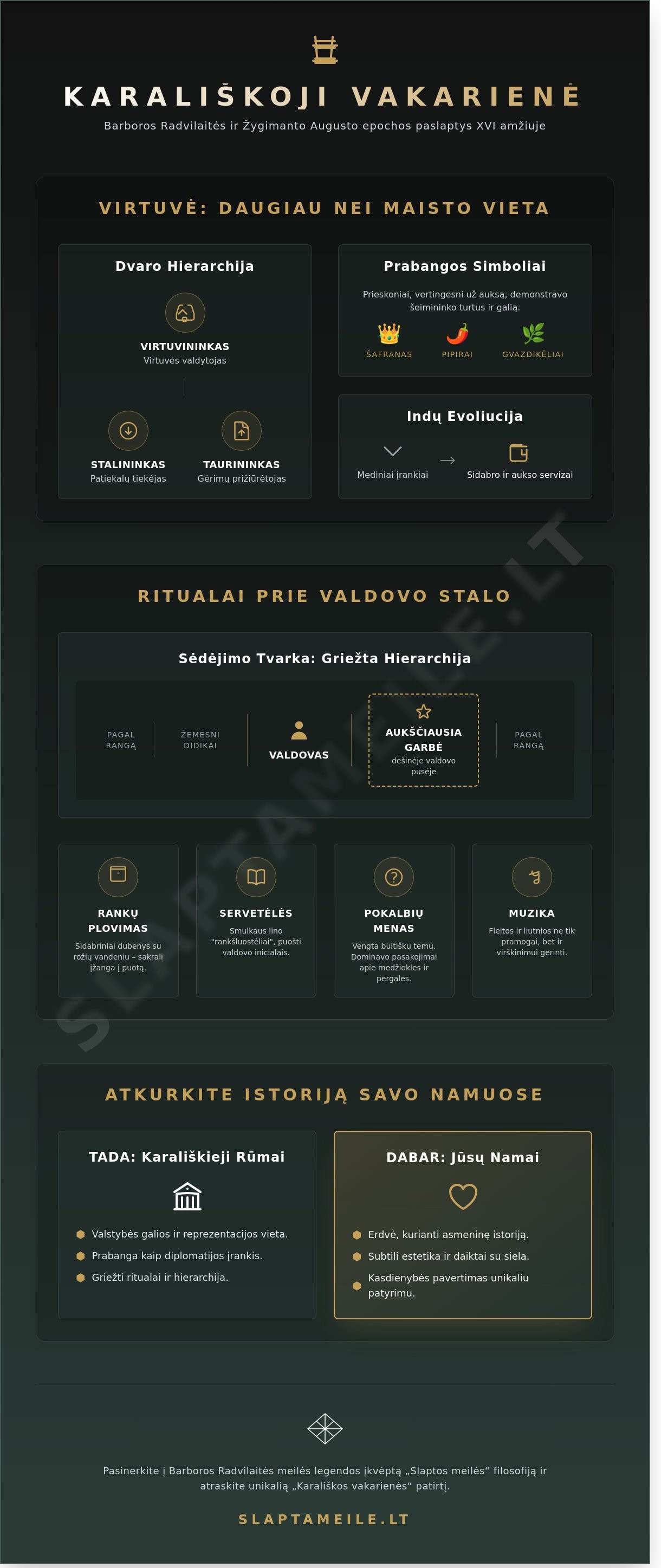
We started talking about the daily lives of the Grand Dukes of Lithuania, kitchen Tampa is not just a place of fire and smoke, but also a true sanctuary of state representation. It is a space where not only luxurious dishes were born, but also political alliances. In the 16th century, the Lithuanian court kitchen reached its peak of prosperity, when food became not only a form of survival but also the highest art. History of the Palace of the Grand Dukes of Lithuania It is said that the best masters worked here, and their hierarchy resembled a strict military structure. The kitchen manager, called the "virtuvininkas" (kitchen master), along with the table setters and cup bearers, ensured that every royal dining ritual was impeccable.
A significant breakthrough occurred during the era of Barbara Radziwiłł and Sigismund Augustus. This romantic couple brought Italian sophistication and the breath of the Renaissance to the Lithuanian court. Culinary culture became refined; the first forks appeared on tables, and fruits never seen before graced the plates. Food became a tool of love and diplomacy, capable of softening the hearts of even the most stern foreign envoys. Each dinner was a meticulously staged performance, in which the royal kitchen played a leading role, demonstrating state power and cultural sophistication.
Secrets of the Ruler's Table
Delicacies from the farthest lands reached the royal table, which at the time seemed otherworldly. The court accounts of 1545 record enormous quantities of exotic goods. Pepper, ginger, cloves, and especially saffron were then valued more than gold. These spices not only added flavor but also demonstrated the host's wealth. Wine flowed freely at the court, but it was no ordinary drink. Each cup had its own unique story, and the cupbearer had to ensure that the drink was not only delicious but also safe for the ruler.
Kitchen as a work of art
Tableware evolved from simple wooden spoons to delicate silver and gold-plated sets that shimmered in the candlelight. Each artisan strived to create a unique piece that would adorn the ruler's table and impress guests. The kitchen's interior and serving details directly demonstrated origin and aesthetic taste. Luxurious tablecloths, imported from Flemish manufactories, and engraved tableware created an atmosphere where every dinner became a historical event, leaving a mark in the chronicles.
- Hierarchy A cook, a Stalinist, a cupmaker, and many assistants.
- Spices Saffron, pepper, and cinnamon as symbols of luxury.
- India Silver dinner sets and engraved goblets that tell the family story.
- Diplomacy Dinner as a means of resolving state affairs in an informal setting.
Lithuanian Court Etiquette: Rituals at the Common Table
In the Palace of the Grand Dukes of Lithuania, dinner was never just about satisfying hunger. It was a meticulously staged spectacle where every movement, gaze, and seating arrangement held symbolic meaning. The highest honor was indicated by the privilege of sitting to the ruler's right. This seat was occupied only by the most influential nobles or the most esteemed foreign envoys. The remaining guests were seated strictly according to their rank and merit to the state, thus creating a living diagram of court hierarchy.
Hygiene at court intertwined with incredible luxury. Before the feasting began, servants would bring silver bowls with rose water for guests to wash their hands. This ritual became a sacred prelude to the feast. Napkins, then called „little towels,“ were made from the finest linen and often adorned with the ruler's initials. They not only protected expensive clothing but also served as a silent means of communication. Our current understanding of table manners and respect for one's neighbor originated precisely in these halls, where every detail taught patience and aesthetics.
The art of conversation and eloquence required special knowledge. While the ruler spoke, everyone else had to listen. The scope of topics was strictly defined; any mundane or vulgar allusions were avoided. Most often, stories about hunts, diplomatic victories, or works of art were heard. The Grand Dukes of Lithuania kitchen during this period, it became a center for cultural exchange, where local traditions met innovations from Italy or France.
Dinner Flow and Ceremonies
The meal would begin with light, appetite-stimulating appetizers, but the main focus was on the cupbearers and tasters. These were high-ranking officials responsible for ensuring the ruler's cup was never empty and that dishes were served at the correct temperature. Music played a crucial role. The flutes and lutes that sounded in the ruler's court in 1544 were not just for entertainment but also for improving digestion. It was believed that harmonious sounds helped with better food absorption and created an uplifting mood.
Symbolism at the table
Each guest would watch their placement with the greatest anxiety, as shifting one seat further from the ruler could signify political displeasure. After lavish feasts, guests often departed not empty-handed. The ruler would bestow gifts of exotic spices, candied fruits, or even jeweled vessels, thus extending the court's hospitality beyond its walls. It was precisely during such banquets, under the light of candles, that the famous love story of Barbara Radziwiłł and Sigismund Augustus blossomed, where every exchanged glance became an object of court gossip. If you desire to create similar magic in your own home, Romantic gift It can become the beginning of your personal story.
Lithuanian court etiquette formed the fundamental rules of courtesy that we still use today. The ability to maintain a pause during conversation, respect for food and surroundings, and attention to detail are legacies that allow us to feel at least a little more noble today.
How to recreate a manor house atmosphere in a modern kitchen?
Modern kitchen often becomes an ascetic space dominated by cold metal and smooth surfaces, but the spirit of a manor can be revived here through subtle, sensually stimulating accents. Royal luxury does not necessarily mean heavy baroque forms; rather, it is the ability to combine the secrets of the past with today's comfort. The integration of historical details begins with a sense of moderation. One authentic element, such as a handmade brass candlestick or an antique-style decanter, gives the space weight and tells a story that is missing in mass-produced interiors.
Lighting is the most powerful tool for altering the perception of space. Candlelight not only softens harsh lines but also creates an intimate, almost sacred atmosphere reminiscent of the ancient banquets held at the Palace of the Grand Dukes. Alongside the play of light, the magic of textiles also returns. Linen tablecloths, valued in Lithuania for centuries, and the sheen of satin provide tactile pleasure. The magic of scents is also inseparable from the manor's aura. Authentic aromas, blending notes of wax, exotic spices, and dried roses, instantly transport the mind to a time when every dinner was considered a work of art.
Small details – big impression
Investing in one unique, history-infused item is a more sustainable path than abundant decoration. This could be a porcelain plate adorned with royal motifs that becomes the centerpiece of your table. When setting the table, it's important to combine vintage-style tableware with modern minimalism. This harmony prevents the space from becoming a museum while maintaining respect for tradition. Every dinner at home can become a small, sacred ritual if you take the time for proper dish arrangement and aesthetically pleasing food presentation.
- Choose dishes with subtle gold or silver details that reflect candlelight.
- Use cloth napkins; it's a simple way to add weight to your dinner.
- Avoid visual clutter: let one historical piece dominate the space.
Gourmet experience at home
The royal menu begins with the selection of local, high-quality products. Lithuanian nobles valued game, forest delicacies, and fresh river fish, so the use of these ingredients lends authenticity to the dinner. Sweet accents complete the story. Chocolate, once a luxury only for the chosen few, can today become the culmination of the evening. Choose a noble, handmade chocolate that hides mysterious flavors within. Adapting etiquette rules, such as slowly savoring each bite and paying attention to your dining companion, transforms a simple family gathering into a noble experience.
Modern kitchen a space where historical continuity meets personal experiences. Creating a manor atmosphere means not just aesthetics, but also respect for the time spent together. When every detail, from the linen tablecloth to the scent of chocolate, is chosen with love, the home fills with regal tranquility.
Gifts that tell stories: for the soul of the kitchen
Everyday life takes on a completely different hue when the objects surrounding us have a soul. Mass-produced items often remain mere functional tools, but creations inspired by 16th-century Lithuanian court aesthetics become a living part of family stories. Modern kitchen today, it is being transformed; it is no longer just a place for cooking, but a sacred space where royal luxury and romantic legends come to life. Lithuanian design masterfully interprets the past, so every glass or textile detail radiates not material value, but historical continuity and respect for our roots.
Choosing a gift that will become a relic over time is a true art. It requires a deep understanding of the emotion we want to leave in another person's home. Luxury in this context is perceived through all the senses: the softness of the fabric, the aroma of natural wax, or the taste of the first sip. When a gift has historical weight, it ceases to be just an object. It becomes an intimate experience that connects the present with the grandeur and passion of Barbara Radziwiłł's era. It is an investment in memories that will be passed down from generation to generation.
Business Gifts and Manor Etiquette
In business relationships, a gift is silent yet highly eloquent sign of respect. Instead of choosing standard, impersonal gift sets, surprise your partners with an experience that tells the story of Lithuanian statehood and cultural achievements. The symbolism of royal gift sets strengthens bonds by showing that you value the longevity and quality of the partnership. According to old manor etiquette, gifts are presented without haste, emphasizing the origin of the creation. Elegance lies in the details, so not only what is gifted but also the story accompanying each set is important.
The coziness and meaning of home
The heart of a home often beats where the biggest secrets are kept. Elegant recipe notebooks allow you to capture your family's culinary legacy, so that your personal kitchen should have its own unique story. The interior’s atmosphere is created by subtle details, such as „Karalienė“ or „Slapta meilė“ candles. They not only illuminate the room but also fill it with scents that transport you to luxurious Renaissance bedrooms. After a hearty dinner, rest is crowned by the highest-quality bedding, making you feel as if you were in a royal suite, where every night is filled with tranquility and historical charm.
„Slapta meilė“: Your Journey into a World of Royal Experiences
As the sun sets behind the towers of Vilnius Castle, the legends of the 16th century—which have slumbered within these ancient walls for centuries—come to life. „Slapta meilė“ is not just a brand; it is a living, pulsating bridge between a majestic past and your everyday life. Every detail, from the subtle feel of the packaging to the deep, sensuous aroma, tells the story of the emotional drama between Barbora Radvilaitė and Sigismund Augustus. The ancient rulers’ kitchen It was known not only for its luxury but also for its intimacy, which we strive to recreate through each of our creations. This is an invitation not just to observe history from the sidelines, but to become a part of it yourself, to feel the same passion that once changed the destinies of nations.
Our „Royal Dinner“ becomes a gastronomic adventure where art, history, and premium flavors meet. It's an experience crafted for those who appreciate slow enjoyment and the power of aesthetics. Lithuanian artists have specially created original pieces for these moments, which adorn your home and lend it a sense of palatial grandeur. Behind each creation lies a small secret, which only you can reveal. This is not mass production; it is personal attention to every experience, aiming to create something intangible yet deeply felt.
The gems of our collection
Each item in our assortment is carefully selected to awaken all your senses. „Queen Barbora's Pearls“ chocolates combine the finest confectionery traditions with royal elegance. This is a harmony of taste and history, melting in your mouth and leaving a luxurious aftertaste. Scented candles, created using natural ingredients, revive the manor's atmosphere in your living room, filling the space with mysterious, historical notes. Exclusive gift sets are the ideal solution for those seeking uniqueness and quality. Each set is like a small work of art, designed to delight your dearest loved ones and give meaning to special occasions.
Experience history live
We invite you not only to taste or smell but also to physically touch the secrets of the past. Our guided tours open doors to the mysterious world of rulers, where guides tell not dry facts but lively, emotional stories that happened hundreds of years ago. These experiences help to understand how the old manor kitchen Tradition and etiquette have shaped our nation's cultural identity. Our products can become part of your personal story, adding a touch of royal splendor and tranquility to your everyday life. Every moment spent with „Secret Love“ is a step into a world where love, beauty, and quality always come first.
Ready to experience royal luxury?
Open the door to your personal manor's secret
Taking care of your personal kitchen, you create a space where the echoes of 16th-century Lithuanian grandeur and refined rituals come to life. We learned that court etiquette began with a deep respect for every detail, and that authentic flavors and scents served as a bridge between everyday life and noble luxury. Every element of „Slapta meilė“ is not a mere object, but a work of art polished by the hands of renowned Lithuanian artists, telling the story of the undying passion between Barbora Radvilaitė and Sigismund Augustus, which irrevocably changed our history. Using only the highest quality materials and time-tested ingredients, we help you create an atmosphere where every dinner or tea moment becomes a small, sacred event.
Let these stories inhabit your home and bestow upon it a regal weight and elegance. This is a unique opportunity not only to touch history but also to become a part of it yourself, cherishing beauty and a slow, meaningful enjoyment of every moment. Your home deserves to become a place where the grandeur of the past meets contemporary comfort and aesthetics.
Dive into the royal history of "Slapta meilė" and choose your favorite piece
May your everyday life be filled with love and historical greatness worth telling to future generations.
Frequently Asked Questions about Manor Etiquette
What created the traditional Lithuanian manor cuisine?
Traditional Lithuanian manor cuisine was a blend of local forest delicacies and exotic spices, dominated by game, trout, and extremely complex confectionery. The rulers' tables were adorned with dishes like bison stew, capercaillie, and elaborate pâtés, while deep flavors were provided by peppers, saffron, and ginger brought from distant lands. This luxurious kitchen was distinguished not only by the abundance of ingredients but also by the slow cooking process, which often lasted up to 12 hours to achieve the perfect aroma.
What is special about manor house etiquette compared to modern table manners?
Court etiquette was based on a strict hierarchy and sacred ritualism, where every movement had symbolic meaning, in contrast to modern, much more relaxed communication. In the 16th century, guests at royal courts sat strictly according to rank, and dinner could last up to 5 hours, observing respectful silence or listening to pieces performed by court musicians. Today we value comfort, but ancient etiquette taught patience and deep attention to each dish served and to the person sitting next to you.
How to create a luxurious atmosphere in the kitchen without a large investment?
You will create a luxurious atmosphere in your home by using subtle, sensory details such as linen tablecloths, candlelight, and accessories that echo historical motifs. Your personal kitchen The atmosphere will change in an instant if you place an elegant bowl of fresh fruit on the table or light a handmade wax candle that emits the mysterious aromas of an ancient garden. The most important thing is not the price of material objects, but your attention to aesthetics and the ability to enjoy the slow, meaningful process of savoring prepared food.
What products were considered symbols of luxury in the palaces of Lithuanian rulers?
Sugar, citrus fruits, and expensive spices were considered the greatest symbols of luxury in the palaces of Lithuanian rulers, with their value in the 16th century equating to that of precious metals. For instance, one kilogram of saffron could cost as much as a good horse, and unique sugar sculptures adorned the tables of only the most noble individuals. These ingredients demonstrated the host's power, wealth, and connections to distant European and Asian trade routes, turning every feast into a demonstration of political power.
Barbora Radvilaitė is considered a patron of culinary culture because of her documented interest in and promotion of sophisticated cuisine.Historical records and inventories from the Radziwiłł family, which she was a part of, indicate the presence of a well-stocked pantry and a wide variety of ingredients. She is also associated with the introduction of new foods and recipes to the Lithuanian court. Furthermore, it is believed that she influenced the development of finer dining practices and the use of elaborate table settings during her time. Her social standing and influence likely encouraged others to adopt similar culinary standards, contributing to the overall elevation of food culture.
Barbora Radvilaitė is regarded as a promoter of culinary culture because she brought Italian refinement, a sense of aesthetics, and new dining traditions to Lithuanian manors. In her environment, food became not only a source of survival but also a romantic work of art, combined with poetry, music, and intellectual conversations. Historical sources mention that the queen particularly enjoyed delicate sweets and rare fruits, thus encouraging local artisans to improve and seek unprecedented flavor combinations.
Are "Slapta meilė" products suitable for everyday use?
„"Slapta meilė" products are designed to add a touch of royal splendor to your everyday life, making them perfect for daily rituals and creating a cozy home atmosphere. Although these products exude luxury and a rich history, their main purpose is to bring joy to a simple morning over coffee or an evening spent with a loved one. It’s a way to turn everyday life into a small, personal celebration, because every moment deserves to be special, mysterious, and filled with sincere feelings.
What gift to choose for someone who values aesthetics and history?
For a person who appreciates aesthetics and history, the best gift is an emotional experience that combines taste, smell, and a story about the great Lithuanian rulers' legend of love. Choose handmade chocolate sets or aromatic candles that evoke the Renaissance era and allow you to feel a part of the royal court, even if just for a moment. Such a gift is not just a simple item; it's an invitation to immerse yourself in a mysterious world where every detail has its own soul and historical continuity.
How does etiquette help create a special atmosphere during the holidays?
Etiquette during holidays acts as an elegant frame, lending gravitas to the gathering and ensuring each guest feels honored and genuinely noticed. By adhering to traditional serving rules or graceful interacting manners, we craft a safe and sacred space where time seems to pause for a shared experience. This helps us detach from the clamor of daily concerns and focus entirely on connection, sharing secrets, flavors, and joy around a beautifully adorned table.