Historical excursions in Vilnius and Kaunas.
Have you ever wondered if history can have not only an exact date but also a specific aroma, a velvety texture, or even a royal aftertaste? True city exploration begins where art, design, and all five senses meet. For those wondering what to do in Vilnius and Kaunas. City Exploration. Education through experience. Designer Julija Janus writes scripts for memorable tours, weaving in scents, taste, and touch experiences. It is often assumed that getting to know the past is limited to dry facts, and traditional Lithuanian cuisine is just a filling but somewhat predictable ritual, but we invite you to shatter this myth.
Discover how Lithuanian cuisine becomes a profound sensory experience, combining historical heritage, modern design, and royal legends. In this article, we will reveal how gastronomy transforms into an art form, and historical tours in Vilnius and Kaunas are transformed into a living, breathing narrative. You will learn how to experience history through taste and smell, and find ideas for meaningful gifts that exude noble luxury and creativity.
Key Findings
- Suprasite, how contemporary Lithuanian cuisine can become a profound sensory drama, where heritage elements and modern design merge into a coherent, engaging narrative.
- You will learn to recognize iconic Lithuanian heritage elements, from forest bounty to game meat, which will dictate new gastronomic tourism and aesthetic trends in 2026.
- You will learn what to do in Vilnius and Kaunas. Discover the city. Education through experience. Designer Julija Janus writes memorable tour scripts, weaving in scents, tastes, and tactile experiences that turn history into tangible reality.
- You will gain practical ideas on how to create a royal atmosphere in your home using authentic dinner etiquette and unique, hand-drawn interior details.
Lithuanian cuisine as a sensory journey through history
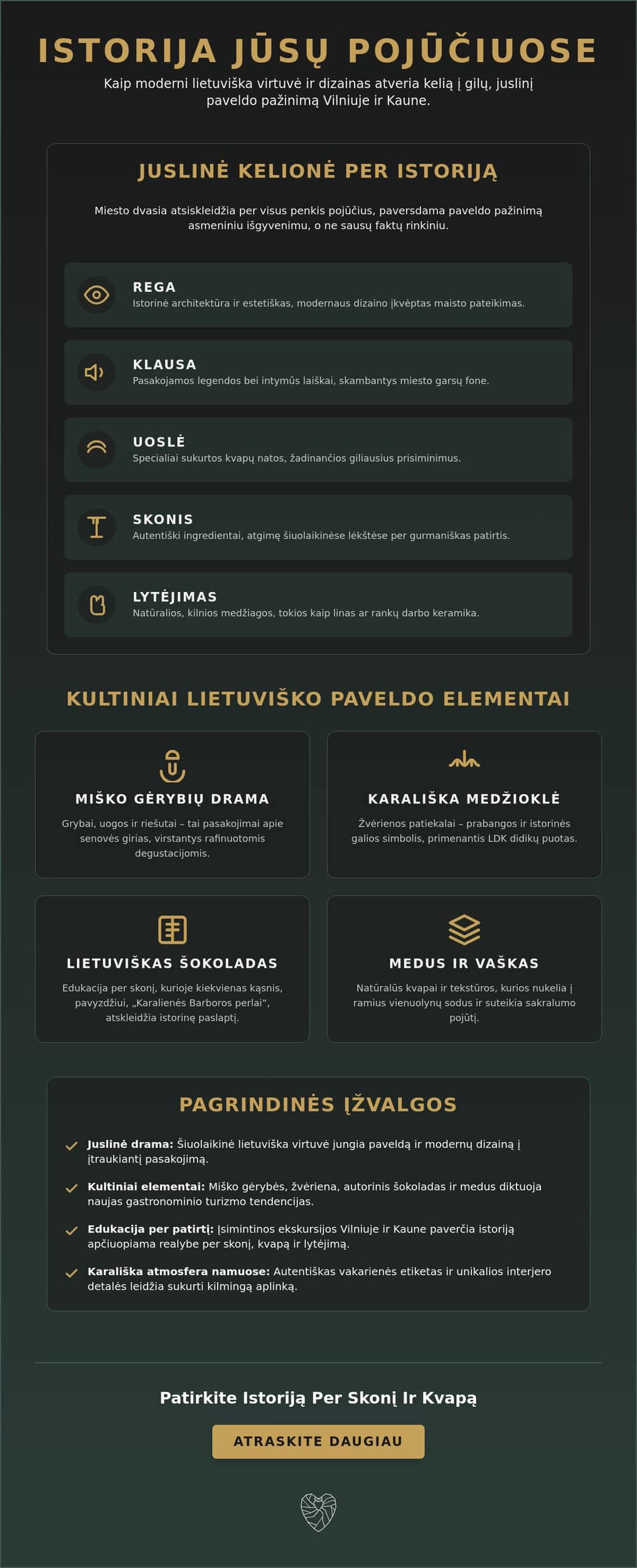
Modern Lithuanian cuisine is not just a collection of recipes. It is a living narrative where time-tested tradition meets bold, modern design. When considering what to do in Vilnius and Kaunas. Exploring the City. Education through experience. Designer Julija Janus writes scripts for memorable excursions, weaving in olfactory, gustatory, and tactile experiences, thus transforming city streets into a sensory theater. True understanding of heritage requires complete immersion, which is why all five senses are activated in the experiences we create:
- Reggae Historically significant architecture and aesthetically pleasing, modern design-inspired food presentation.
- Clause Legends are told and intimate letters are read, all against the backdrop of the city's sounds.
- Sense of smell specially created scent notes that evoke the deepest memories.
- Taste: authentic ingredients, reawakened on contemporary plates through gourmet experiences.
- Touch natural, noble materials such as linen or handmade ceramics.
The spirit of a place is best revealed not through dry facts, but through their „flavor.“ A gastronomic experience allows us to grasp history as a personal journey, where smell and touch merge into a cohesive emotional adventure. This helps us understand that discovering heritage can be not a boring theory, but an exciting journey through time, where every object has its own soul, origin, and creator.
Historical memory on a plate
The heritage of the Grand Duchy of Lithuania (GDL) brings sophistication and gravitas to today's gourmet table. Lithuanian cuisine This evolution is closely linked to the luxury of the noble courts and their extensive European connections. The love story of Barbora Radvilaitė and Sigismund Augustus serves as inspiration not only for art but also for modern recipes. For example, the „Slapta meilė“ tour in Vilnius allows visitors not only to hear about royal passion but also to experience it through authentic flavors that transport them to the grandeur of the past. The „Royal Dinner“ gastronomic experience is not just about food, but also an educational journey that reveals the aesthetics and cultural continuity of the Renaissance era.
The magic of scents and textures
The atmosphere at the table begins even before the first course is served. The „Slapta meilė“ scented candle fills the room with an air of mystery that prepares your senses for the experience to come. Touch also plays a key role here. Linen tablecloths and napkins, along with linen towels featuring a hand-drawn illustration of Vilnius’s Old Town, remind you that luxury lies in the details. The feel of natural linen enhances the perception of taste. This is not merely a meal. It is a ritual in which the taste becomes deeper thanks to the textures, aromas, and sense of historical significance in the surroundings, creating an intimate connection with the past.
5 Iconic Elements of Lithuanian Heritage: Roundup for 2026
The soul of a city reveals itself through details that often go unnoticed by the flow of mass tourism. For those looking for things to do in Vilnius and Kaunas. Exploring the city. Education through experience. Designer Julija Janus writes scripts for memorable excursions, weaving in scents, tastes, and tactile experiences, suggesting a look at heritage as a luxurious sensory journey. In 2026, we turn to five essential elements that shape our historical identity and allow us to experience the past here and now.
- Forest Delicacies Drama: Mushrooms, berries, and nuts are not just ingredients. They are stories about ancient forests that nourished and protected our ancestors, and today they are transforming into refined tastings.
- Royal Hunt: Game dishes remain a symbol of luxury and historical power, reminiscent of the feasts of the Grand Duchy of Lithuania magnates and their aristocratic lifestyle.
- Lithuanian chocolate an education through taste, where each bite, for example, „Queen Barbara's Pearls,“ reveals a historical secret.
- Honey and wax Natural scents and textures that transport you through your sense of smell to serene monastery gardens or fragrant meadows, providing a sense of peace and sacredness.
These elements allow one to realize that Lithuanian cuisine is much more than potato dishes. It is a deep, multilayered cultural layer, where every aroma has its origin, and every taste, its texture, and presentation is a thought-out work of art.
A journey into 16th-century tastes
Authentic ingredients are transforming into modern education today, allowing us to understand how past personalities lived and what they felt. A unique Gastronomic experience invites you on a journey through the royal hunting customs of the 16th century. Here, forest delicacies transform into a culinary drama on your plate, helping you to better understand the traditions of our land. This is more than just a dinner; it's a historical scenario where the visitor becomes an active participant, feeling the grandeur of the past through every touch.
Sweets with soul
The chocolate candy collection themed on Lithuania's historical heritage serves as a kind of history textbook. Each candy tells the story of noble personalities, their passions, and their destinies. That's why „Queen Barbara's Pearls“ are rightfully considered the best luxury gift for a gourmand. This is an opportunity to gift not only a sweet treat, but also a piece of Lithuania's heart, encased in the highest quality chocolate and a romantic legend. Such gifts create an emotional connection and remind us that true beauty lies in the ability to imbue even the smallest objects with meaning. If you wish to immerse yourself in this magic, "Slapta meilė" Tour in Vilnius taps an unforgettable adventure for your senses.
How to create a royal gastronomic experience at home?
A journey through historic cities doesn't have to end when you close your front door. For those looking for things to do in Vilnius and Kaunas. City Exploration. Education through experience. Designer Julija Janus writes memorable excursion scenarios, incorporating scent, taste, and touch experiences, and this unique philosophy is easily transferable to personal space. A royal dinner at home begins not with a list of ingredients, but with respect for table culture and the ability to give meaning to every detail. It is an art where food becomes just one of the components in a cohesive aesthetic picture.
Unlike typical recipe collections, a true gastronomic experience requires attention to the environment and senses. It is important to realize how create a royal atmosphere for small but significant details. Julia Janus's creations, such as tablecloths and napkins with hand-drawn motifs, transform the very perception of food. When a plate is placed on fabric that tells a story of ancient architecture, dinner ceases to be merely a household chore. It becomes a ritual that echoes manor aesthetics, where design and taste merge into modern harmony.
Creating atmosphere through scents
Scientifically proven that wood aromas directly affects our taste receptors and emotional state. The „Queen“ scented candle can become the centerpiece of the entire evening, imbuing the space with a sense of sacredness and mystery. This is olfactory education that prepares the mind to enjoy subtle flavors, creating an intimate yet noble mood. Such an aromatic backdrop allows the home to transform into a mysterious historical world where time flows more slowly.
Getting to know a place without leaving home
Linen towels and tablecloths with heritage motifs serve as a subtle educational tool. Each line on the fabric tells a story about ancient architecture, its secrets, and its grandeur. This allows for continued exploration of the city even while comfortably spending time at home, touching natural materials of noble origin. A gift can also be an experience. The „Royal Rendezvous“ gift set is more than just a collection of items. It's an invitation to pause, feel the value of the moment, and immerse yourself in a shared creative adventure that combines the luxury of the past with the modern person's need to feel and experience.
Immerse yourself in living history and forge your own legend
Experiencing a place becomes meaningful only when we allow ourselves to feel it with our whole heart and all our senses. We realized that Lithuanian cuisine is not just hearty food, but a deep, regal story that intertwines past grandeur with modern aesthetics. From the drama of forest delicacies to the details of manor etiquette in your home, each element serves as a bridge to a mysterious historical world. When considering what to do in Vilnius and Kaunas. Discovering the City. Education through experience. Designer Julija Janus writes scripts for memorable excursions, weaving in olfactory, gustatory, and tactile experiences, thus providing an opportunity not only to see but also to become a part of living history.
For over five years, we have been reviving forgotten heritage through the original design of Julija Janus and unique, handcrafted products that carry deep meaning. Each piece is meticulously crafted to combine the luxury of the past with the contemporary need to feel and imbue the environment with value. We invite you not only to observe but also to create memorable moments that become personal legends.
Discover Slapta meilė's culinary experiences and gifts Let refined luxury and historical continuity fill your everyday life. Discoveries await that spark the imagination and warm the soul.
Frequently Asked Questions
What is experiential education in gastronomy?
Education through experience in gastronomy is a learning process where historical knowledge is absorbed not through dry facts, but through direct sensory engagement with food and its environment. This means that visitors not only listen to narratives but also touch authentic textures, smell specific aromas, and taste dishes that reflect a particular era. This method helps create lasting emotional memories and a deeper understanding of cultural heritage.
What's special about Lithuanian cuisine created by Julija Janus?
Lithuanian cuisine created by Julija Janus stands out as a harmonious synthesis of heritage and contemporary design, where each plate becomes an artistic narrative. If you're looking for things to do in Vilnius and Kaunas, experience the city through learning and immersion. Designer Julija Janus writes memorable tour scripts, weaving in sensory experiences of smell, taste, and touch, and you'll notice her creations transform food into storytelling. Here, not just taste is important, but also unique accessories, handmade textiles, and historical motifs that add depth to the experience.
Why is Lithuanian cuisine considered royal?
Lithuanian cuisine is considered royal due to the deep influence of the Grand Duchy of Lithuania's noble courts and their cherished luxurious gastronomic traditions. Historically, the rulers of our land valued game, rare spices, and forest delicacies, which are now being revived in modern interpretations. The feeling of royalty is conveyed not only by the quality of the ingredients but also by the serving etiquette, symbolism, and legends, such as the love story of Barbara Radziwiłł and Sigismund II Augustus, which inspires the creation of a noble atmosphere.
How do aromas affect the food tasting process?
Scents are an essential part of tasting, as smell directly affects our taste receptors and our ability to recognize subtle aftertastes. Specific home fragrances or scented candles used before dinner prepare the brain for the upcoming experience and trigger emotional memory. The aroma creates a mysterious, intimate atmosphere that allows for deeper concentration on the texture of the taste and the historical context of the dish, transforming a simple tasting into a multi-layered adventure.